

Making tempeh at home
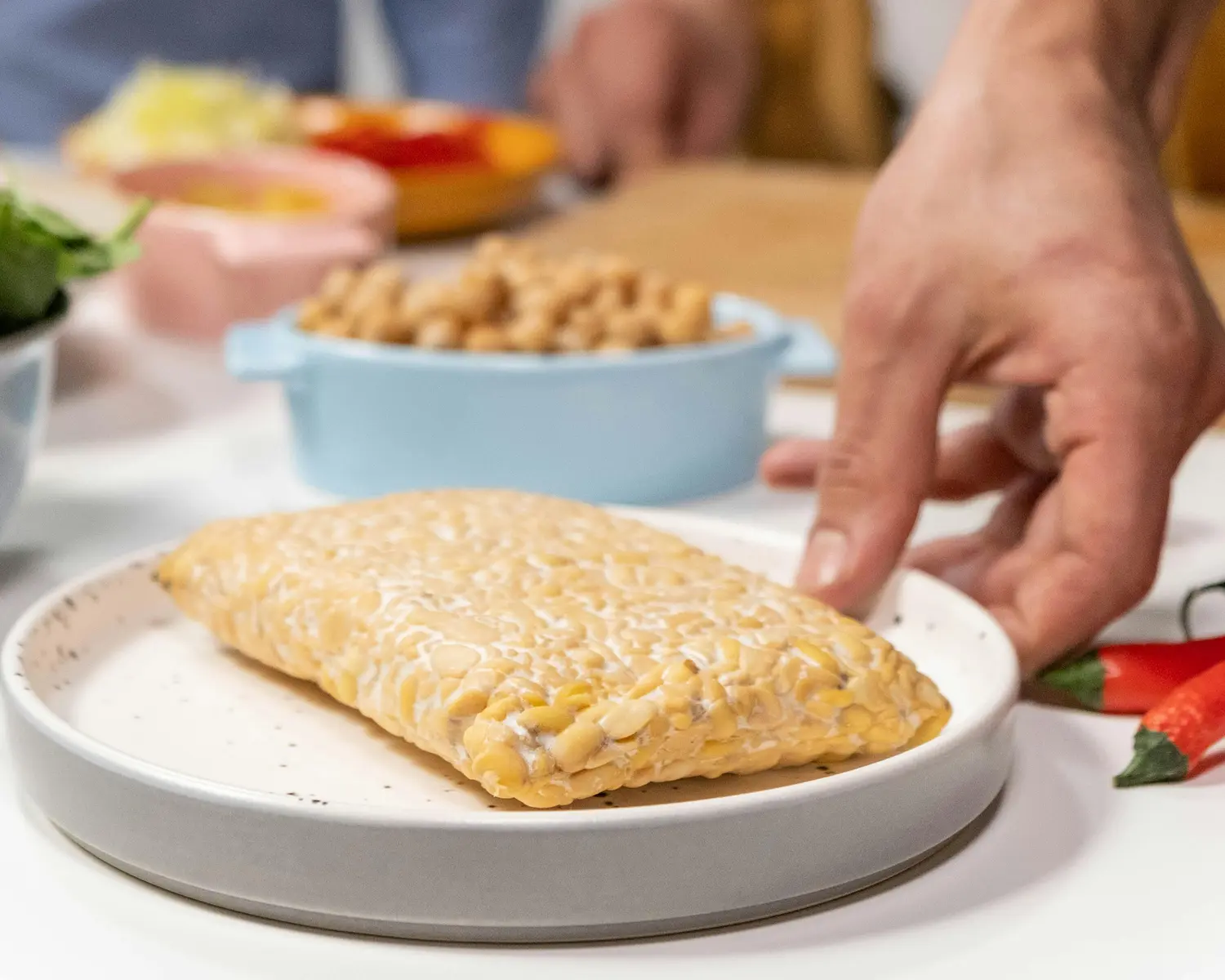
Making tempeh at home is very easy. All you need are soya beans, tempeh starter cultures and a little rice vinegar.
Ingredients / Equipment
(for approx. 1 kg of tempeh)
Method:
Step 1:
Soak the soya beans in water overnight (8 to 10 hours).
Step 2:
Then place the soaked soya beans in a large enough saucepan. Fill the saucepan with enough water to cover the beans completely. Now add the vinegar and boil for about 30 minutes.
Next, drain the water and leave the beans in the pot. Dry them on the hob over a low heat, stirring constantly. If they are not completely dry, they can also be spread out on a kitchen towel and patted dry.
Step 3:
Spread the tempeh starter evenly over the beans and mix everything carefully with a clean spoon for one to two minutes, so that the tempeh starter cultures are evenly distributed throughout the whole soy mixture.
Step 4:
Take two small plastic bags (e.g. freezer bags) measuring approximately 18 x 27 cm and use a thick needle to pierce small holes in them, spaced no more than 1 cm apart.
Divide the mixture between these two bags and seal them tightly. Now flatten the bags to a thickness of approx. 4 cm.
Step 5:
Place the bags in a warm place (e.g. oven, dehydrator) at approx. 28 to 32 degrees for approx. 36 to 48 hours. The tempeh is fully matured when the beans are completely covered with a white fungal mycelium. Your homemade tempeh is now ready! You can now enjoy fresh and delicious tempeh. Bon appétit :-)
Good to know:
Occasional dark patches (black/grey) are completely normal in tempeh. These grey patches form during the ripening process due to the growth of tempeh spores, which, like the fungus itself, are completely harmless.
If your tempeh has coloured patches (purple, orange), it has gone off and should be discarded.
Can I eat tempeh raw?
The tempeh starter cultures are produced under sterile conditions. However, if you make tempeh yourself at home, it is always possible for bacteria to ‘sneak in’ and contaminate the batch. These bacteria could grow during the fermentation process. We therefore recommend frying or cooking the tempeh before eating it.
Tips and suggestions:
You can, of course, also use unhulled soya beans. However, you will first need to remove the husks from the beans. Soak the beans for longer (approx. 12 hours) and then knead them in the water until the husks have come away.
This also works with chickpeas, lupins and black beans, for example.
The finished tempeh can either be cooked straight away (e.g. fried in a pan) or stored in the fridge for about 1 week. Freezing it will, of course, extend its shelf life even further (around 3 months). In that case, however, it is advisable to freeze the tempeh as soon as possible.
Testimonials:
Read Olivia’s account of making her first batch of tempeh here.
Order tempeh starter cultures now:
Tempeh and natto starter cultures, as well as other ingredients, are available from fabulous! The Vegan Shop Switzerland.